The unresolved problem of ocean pollution and the solution. Certified treatment of OBP by TONTOTON
While mitigating the issue of ocean plastic is important, at TONTOTON, we’re more interested in an equally dangerous and exponentially growing issue: ocean-bound plastic.
Ho Chi Minh City, Vietnam (PRUnderground) May 1, 2021
What are ocean-bound plastics (OBP)?
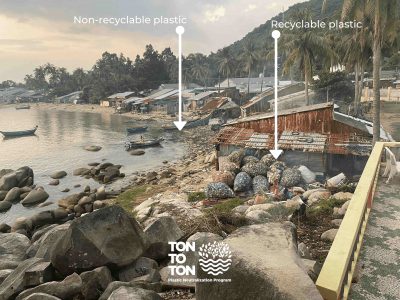
Ocean-bound plastics are non-recyclable plastics that are likely to end up in the ocean. There are no real studies to show where these plastics come from, but when we’re talking about ocean-bound plastic, we’re referring to plastic found within 50km of the coast. They consist of low-value plastic that cannot be recycled—what we refer to as “orphan plastic”.
Ocean-bound describes plastic’s last stage before it ends up in the oceans. It appears in rivers, shorelines, and even land. While the majority of ocean-bound plastic originates within 50km of the shore, OBP may come from a location more inland, but because of mismanagement, it’s now headed toward our oceans. This means that ocean-bound plastics are an issue that everyone needs to be aware of and attempt to mitigate, even if you’re outside of the 50km range.
Why focus on ocean-bound plastic?
The majority of ocean plastic—around 80%—originates from the land. Once mismanaged plastic (plastic that is either littered or improperly disposed of) reaches the ocean, it’s much more difficult to clean up. Much of it sinks to depths that are too difficult to reach, and even the floating plastic is challenging to clean up and manage. On top of this, ocean plastics pose a great risk to wildlife and ecosystems.
While cleaning up ocean plastic is important, it’s a last-ditch effort responding to mismanaged plastic on land. Focusing on ocean-bound plastic is a more proactive approach to keeping our oceans clean.
How can we prevent non-recyclable OBP from becoming ocean plastic?
Ensuring that ocean-bound plastic does not become ocean plastic is no small task. Of course, the best way to guarantee that plastics stay out of the ocean is to reduce creation and consumption of non-recyclable plastics and stop the issue at its source.
While we wait for a viable substitute for non-recyclable plastics, we focus our efforts upon projects that seek to stop mismanaged OBP before it hits our oceans.
These projects attempt to do the following:
– Raise awareness about mismanaged OBP for both individuals and businesses.
– Reduce non-recyclable plastic consumption.
– Properly manage non-recyclable plastic (by collecting, treating, and processing the plastic for safe elimination).
– Work on clean-up methods (as a last resort; ideally, plastics would be properly managed before they turn into ocean-bound litter).
How can plastic credits reduce ocean-bound plastics?
Plastic credits through TONTOTON fund projects that focus on the above. Our goal is to properly gather, manage, and eliminate OBP before it joins the endless tonnes of plastic that already litter our oceans.
In order to properly eliminate the OBP that we gather and store, we valorize the plastic by co-processing rescued plastics to produce Alternative Fuels & Raw Materials. Once the plastics we have collected become valorized, we send our processing activities to the Control Union to obtain our Neutralization Certificate.
Through our projects, funded by plastic credits, we are able to properly manage tonnes of ocean-bound plastics before they reach our oceans and damage their fragile ecosystems.
Distributed via PR Underground