
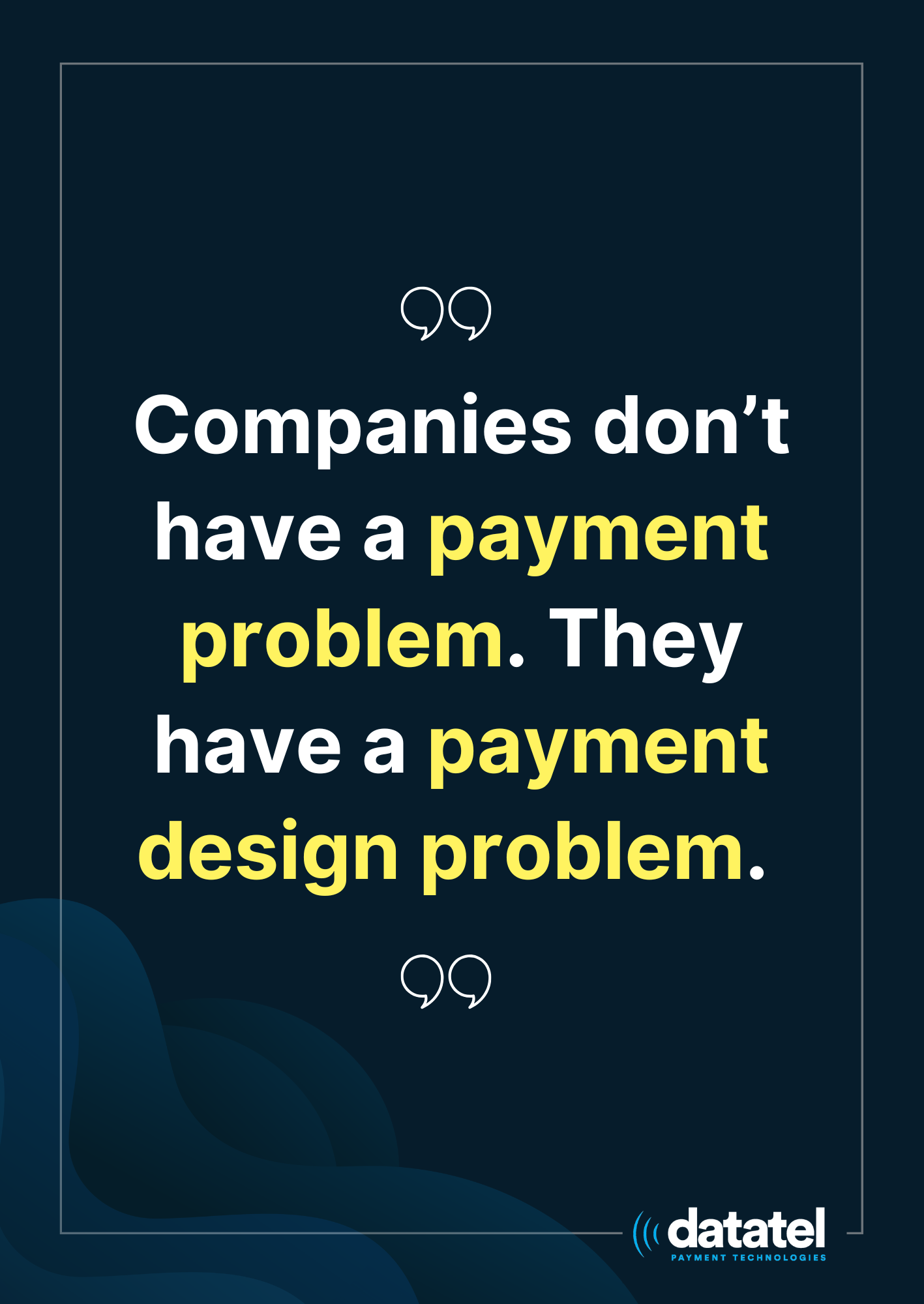
Companies Don’t Have a Payment Problem. They Have a Payment Design Problem. Datatel Introduces Payment Design Framework as Organizations Rethink IVR Payments and Payment Architecture
As payment channels expand, organizations are discovering that risk, cost, and compliance challenges stem from how payments are structured, not how they are processed
Toronto, Canada / Miami, FL (PRUnderground) April 21, 2026
Organizations across healthcare, utilities, and the public sector are facing growing pressure to modernize how they accept payments. Yet despite continued investment in new payment channels and technologies, many are seeing rising compliance costs, fragmented customer experiences, and increased operational risk.
The issue is not the availability of payment tools, it is how those tools are deployed.
Organizations that are investing heavily in digital payment channels, including online portals, mobile applications, and IVR Payments are seeing an unexpected result: increasing compliance costs, fragmented operations, and greater exposure to risk.
Payment processes typically evolve incrementally. Online portals, call centers, mobile apps, and in-person payments are often implemented independently, without a unified architecture. As a result, sensitive payment data flows through multiple systems and, in many cases, through people. This creates unnecessary exposure, expands PCI scope, and introduces inefficiencies that are difficult to manage at scale.
A growing number of industry leaders are beginning to recognize that payments are not simply a function of finance or IT. They are an operational system that requires intentional design.
This shift reframes the conversation. Instead of asking, “How do we accept payments?” organizations are starting to ask, “How should payments exist within our business?”
That distinction is becoming critical as regulatory requirements evolve and as organizations look to reduce cost while improving customer experience. Efforts to address compliance through policy and training alone are proving insufficient when the underlying payment architecture continues to expose sensitive data across multiple touchpoints.
Datatel, a provider of secure payment infrastructure and advisory services, is addressing this challenge by focusing on payment design as a foundational discipline. The company’s approach centers on restructuring payment flows to remove sensitive cardholder data from human interaction and limit its exposure across systems.
“Most organizations have added payment capabilities over time, but very few have stepped back to design how payments should actually operate within their environment,” said Barnard Crespi, Co-Founder and Co-CEO of Datatel. “When payments are designed intentionally, you reduce risk, simplify compliance, and improve the overall experience at the same time.”
This perspective is gaining traction as organizations seek more sustainable approaches to compliance and operations. Rather than treating PCI as a standalone requirement, payment design integrates security, efficiency, and governance into a single framework.
As digital channels continue to expand and customer expectations evolve, organizations that treat payments as a design challenge, rather than a transactional function, are likely to be better positioned to manage risk and scale effectively.
To support this, Datatel offers a short working session called “How Money Flows.”
This is a 20–30 minute diagnostic discussion, not a product review, designed to give you a clear view of how payments actually move across your environment today.
During the session, we walk through how payments flow across channels, where design decisions may be introducing risk or inefficiency, and how your current architecture is performing under real conditions.
In many cases, this also surfaces areas where revenue is unintentionally lost or delayed—not through a single failure, but through how the system is structured end to end.
Following the session, you’ll receive a structured report that outlines:
- How payments move across your channels today
- Where risk or control gaps may exist
- Points of inefficiency or operational friction
- Areas where revenue may be lost, delayed, or misapplied
Book your session to receive the walkthrough and structured report: https://calendly.com/datatel/how-money-flows-session-20-30-team
Also published on
Distributed via PR Underground